


Machining is a manufacturing method that involves shaping a machine component, whose design and construction have already been determined and whose manufacturing process has been specified, by subjecting it to cutting operations using designated cutting tools on machining machines suitable for the manufacturing process. This method is generally preferred for the production of parts that require high precision and have complex geometries.
It is especially important in the metalworking industry, as well as in the processing of engineering plastics and alloys. Through machining, results with the desired dimensions and surface quality can be achieved, which provides significant efficiency in the production process.
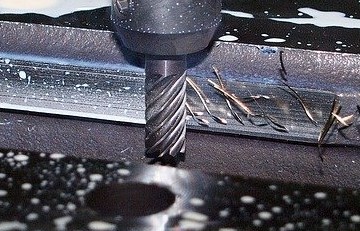
One of the biggest advantages of machining is the flexibility of the production process. Changes made in the design or prototype production stages can be quickly adapted, and products can be brought to the desired specifications with adjustments made on the machines. Additionally, the production line using this manufacturing method can serve a wide range of needs, from mass production to single-piece manufacturing. This way, effective results can be achieved both in high-volume production and in custom, single-part manufacturing.
At every stage of the machining process, quality control systems are implemented, and criteria such as part dimensions, tolerances, and surface roughness are continuously monitored. This ensures that the final product is perfect in every aspect. Additionally, another important feature of machining is its ability to minimize material waste. The material used is generally discarded in the form of chips, but this waste material can also be recycled, providing an environmental advantage.